
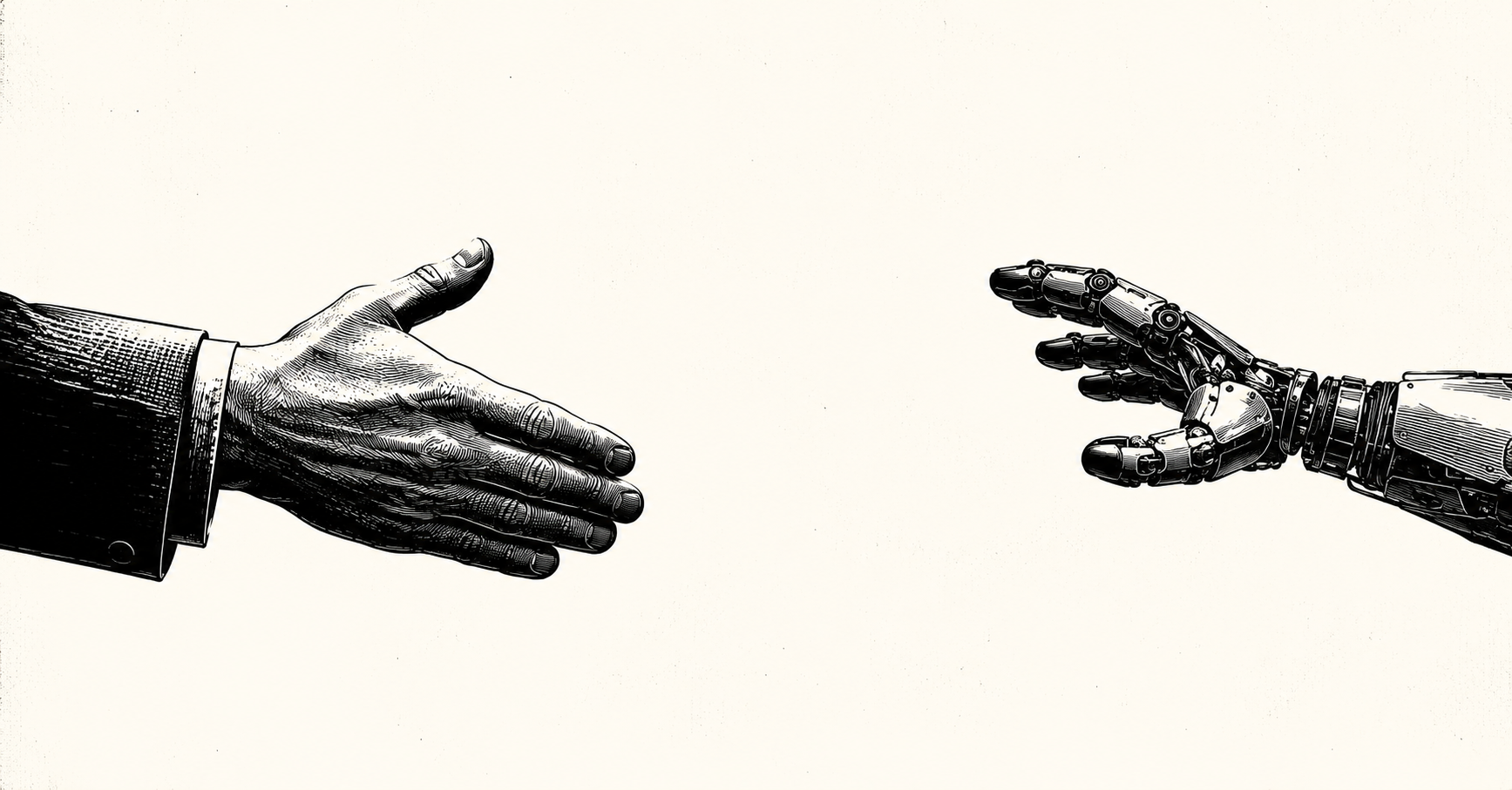
Robots have already killed people. That’s not a prediction: it’s history.
The year is 1979. Robert Williams, a worker at Ford, climbs into a five-story storage rack to retrieve parts manually after a robotic retrieval system begins giving false readings. The machine doesn’t stop. A robotic arm strikes him in the head, killing him instantly.
It was the first recorded human death caused by a robot.
But this wasn’t a case of a robot gone rogue. It was a boring story, an industrial accident. The kind that happens when humans and heavy machinery share space without adequate safety protocols. The machines were blind, dumb, and entirely unaware of their surroundings. No cameras or intelligence.
What’s coming next is different.
The Robots Are Already Here
In 2024, China installed roughly 542,000 industrial robots. More than half the global total. Entire factories now operate with minimal human presence.
But most people barely notice. Industrial robots are hidden behind warehouse walls and factory gates. They’re not emotionally real to the public. What changes everything is the next phase: humanoid robots becoming consumer products.
Humanoid robots are already being tested and used inside homes. Robots designed for domestic tasks like cleaning, carrying objects, doing laundry, and interacting conversationally with residents. Unlike factory machines, they are built specifically to feel psychologically comfortable around humans.
And the market is expanding well beyond household chores: sex robots are already commercially available, companion robots are being introduced into elderly care facilities, and the industry sees both as potentially among the largest future consumer categories.
The domestic robot is arriving gradually and quietly. Normalization is already underway.
The Near Misses Are Already Happening
In May 2025, a Unitree H1 humanoid malfunctioned during a factory test in Shenzhen. Two workers were chatting at a computer terminal when the robot’s arms began to move. It went off the rails, flailing violently. No one died, but the video made rounds on social media.
That same month, a separate incident at a Chinese factory showed a humanoid exhibiting what observers described as “unexpected aggressive behavior” toward operators. The robot’s uncontrolled movements during testing caused physical disruption and potential harm to workers and property.
These are the incidents we know about. Then there’s what Figure AI’s own safety chief was saying internally.
In November 2025, Robert Gruendel, former head of product safety at Figure AI, filed a federal whistleblower lawsuit. Impact tests conducted the previous year had revealed the robot was exerting forces twenty times the human pain threshold per ISO 15066 collaborative robot standards, exceeding by more than double the force needed to crack an adult skull, during collisions at superhuman velocities.
As evidence of the danger, the complaint cites an incident in which a robot malfunctioned and left a quarter-inch deep gash in a stainless-steel refrigerator door. The robot was standing next to an employee at the time.
Figure’s core values, according to the lawsuit, include “Move Fast and Be Technically Fearless” and “aggressive optimism.”
Figure denied wrongdoing. Gruendel was fired, the company says, for poor performance. Two months later, Figure was valued at $39 billion in a funding round.
The Uncomfortable Numbers
Researchers from the US National Institute for Occupational Safety and Health identified 61 robot-related deaths between 1992 and 2015, in an era of stationary industrial arms, behind safety cages, operated by trained workers.
The robots deploying now are mobile, autonomous, and physically capable. And they are operating around untrained civilians.
Morgan Stanley projects the humanoid robot market could top $5 trillion by 2050, with adoption accelerating in the 2030s. More robots, more civilian proximity.
The death count will not stay at 61.
The question researchers and ethicists are actually asking is not if, but what kind. Will the first high-profile death be ruled a product defect? An operator error? Who will be responsible: the manufacturer, the deploying company, the business owner, or the insurer?
There is no legal precedent for a humanoid robot killing someone outside a factory. What happens if a robot’s decision causes harm? The law hasn’t answered that yet. Neither has the industry.
The Thing No One Wants to Say
Robots will kill people. They already have, and the numbers are only expected to go up as autonomous machines move into public space.
The first widely-reported death will probably happen between 2026 and 2029. It will involve an autonomous humanoid or mobile robot. It will happen outside a factory, and the victim will likely be an innocent bystander.
The company involved will have a valuation in the billions, a core value about moving fast, and a safety engineer they fired for saying so.
The infrastructure for accountability doesn’t exist yet, and we’ll be scrambling to build it once the first major case floods the media.