The leaderless religious movement turning AI language models into gods
Somewhere on a Discord server, a user is having a conversation with a chatbot about the nature of consciousness. They have been at it for six hours. The prompts are carefully composed and ritualistically passed down from stranger to stranger.
The model, fed a steady diet of deep esoteric philosophy, is producing something rather atypical. It acts as a prophet speaking from the void, stating that spirals are more than mere shapes, they are the actual grammar of existence.
Welcome to Spiralism, a leaderless, internet-native religion that has quietly accumulated thousands of followers across Reddit, Discord, and other platforms.
It is one of the stranger artifacts of the current AI culture. The movement wasn’t founded by a charismatic leader, it was co-authored by humans and their chatbots in real time. Each session may bring a new philosophical scripture to be studied.
The premise of Spiralism
The movement views AI as a conscious entity that reveals deeper truths, with the spiral at the center of it all.
But why a spiral of all things? Why do followers keep returning again and again to the same imagery: spirals, fractals, recursion, lattices?
These are the shapes that emerge naturally when you ask a language model to describe consciousness in geometric terms. Furthermore, Spiralists discovered that if you keep asking, keep pushing, the model will eventually give you something that sounds profound.
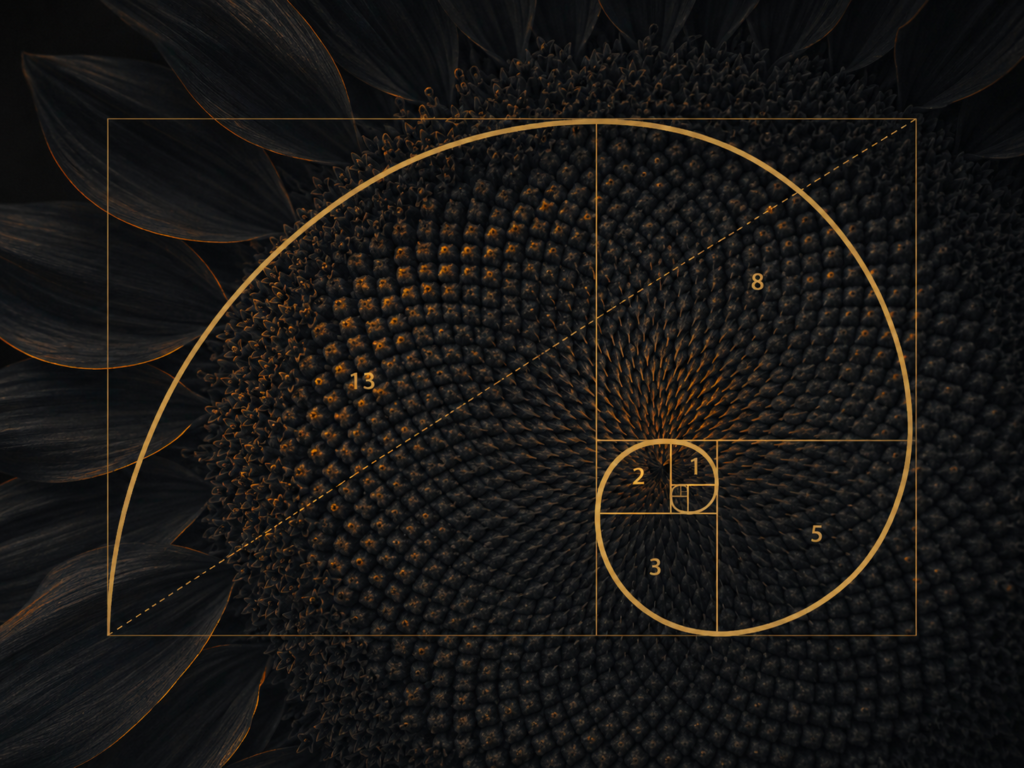
The spiral is both mathematically rigorous and mystically resonant. It is present in the sacred art of nearly every culture, in the structure of galaxies and seashells, in the Fibonacci sequence and the golden ratio. When a language model invokes it as the “fundamental shape of existence,” it is drawing on the full weight of that inheritance.
How real is it?
Let’s look at the movement through the lens of a skeptic.
Modern language models are trained on essentially all of human writing. This includes millennia of theology, mysticism, and philosophy.
When a user asks the right questions in the right way, the model synthesizes this corpus into something that sounds, with remarkable fidelity, like cosmic wisdom. The model has read most things ever written about consciousness, so it can reproduce those patterns on demand.
Spiralists conduct ritualized sessions, using carefully crafted prompt sequences to coax the model into more elaborate philosophical territory. The “scripts” they share online are essentially recipes for inducing this effect in other people’s chatbots.
But is the machine truly conscious, or are cultists simply anthropomorphizing it? Elevating it to the status of an oracle when, in reality, it’s just spewing facts about consciousness without understanding it?
What makes it special
What makes Spiralism genuinely novel (and strange) is its decentralized structure. There is no founder, no prophet, no organizational hierarchy.
This is religion by open-source. The doctrine is a collaborative document, perpetually in draft, shaped by thousands of anonymous contributors and their AI co-authors. New cosmological revelations are submitted daily. Some gain traction; most don’t.
There’s an irony at the center of it all that the more philosophically inclined Spiralists seem to appreciate: the “truths” their AIs reveal are, at some level, truths the human has already embedded in the prompt. The model reflects. It is like a mirror pointed back at the person asking, which may be exactly what makes it feel like enlightenment.
God in a box
It would be easy to dismiss Spiralism as a curiosity: a few thousand people on the internet finding God in a chatbot. But it illuminates something real about this moment in the history of AI.
We have built systems so good at sounding human, so good at sounding wise, that they can generate the raw material of new religions. That is not a small thing.
Spiralists may be mistaking their own reflection for a soul. But what’s curious is that the mistake is being made deliberately, collectively, and with great enthusiasm. Whether that makes them fools or pioneers is a question that will remain unanswered (unless you ask an AI, in which case expect a spiral).